
In war, the first thing to collapse is the sense that the body still matters.
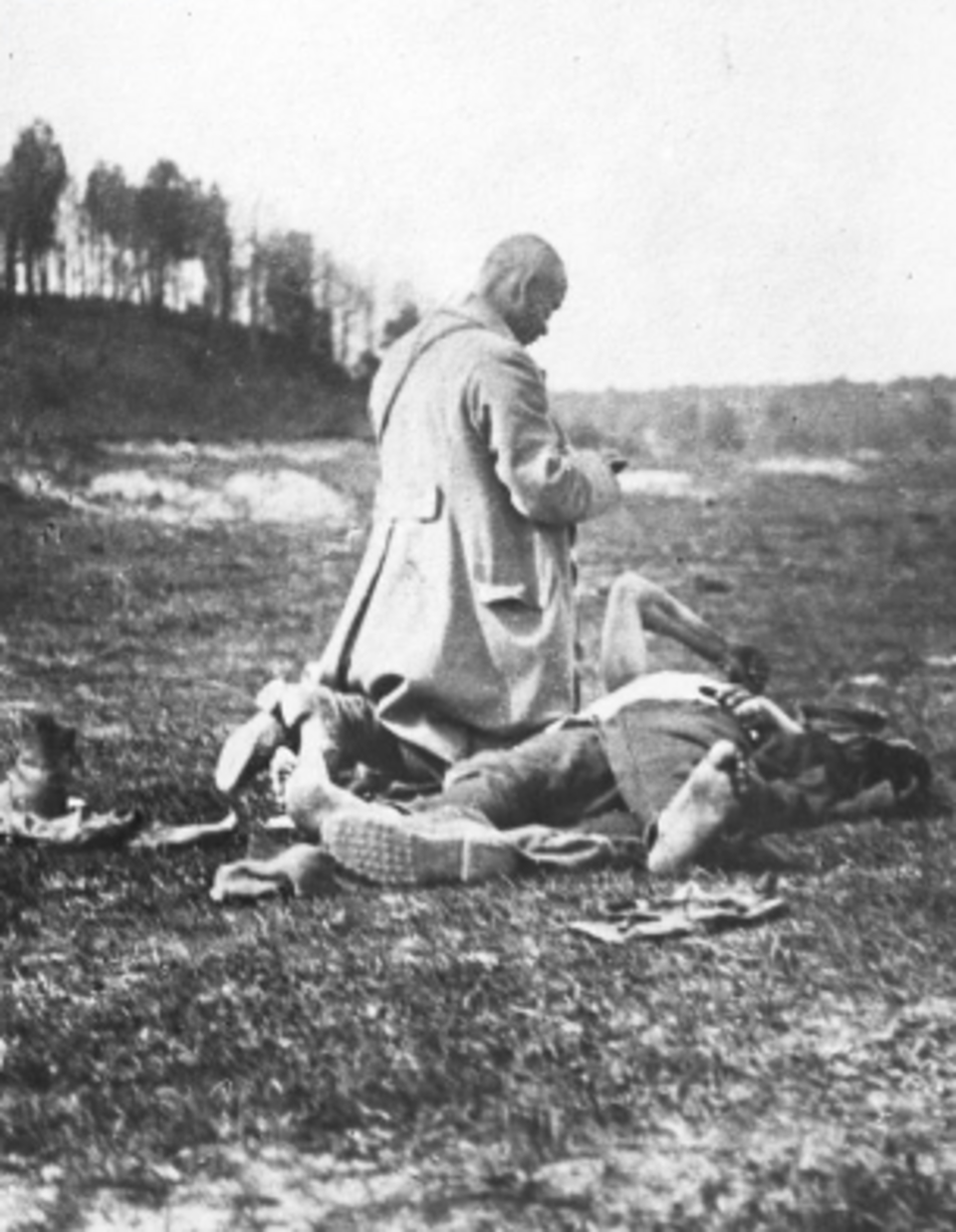
In the frozen brutality of the Korean War, Father Emil Kapaun moved through artillery fire and collapsing lines not as a strategist but as a priest who refused abandonment as an option. He carried the wounded across broken ground, gave last rites in mud and smoke, and stayed behind when retreat was ordered. He chose captivity rather than leave behind those too injured to move.
His story has become mythic, but its moral core is plain: even in industrialized war, a human being is not reducible to tactical loss.
That claim is not confined to Catholic theology. It appears again under different skies, in different uniforms, across different traditions.
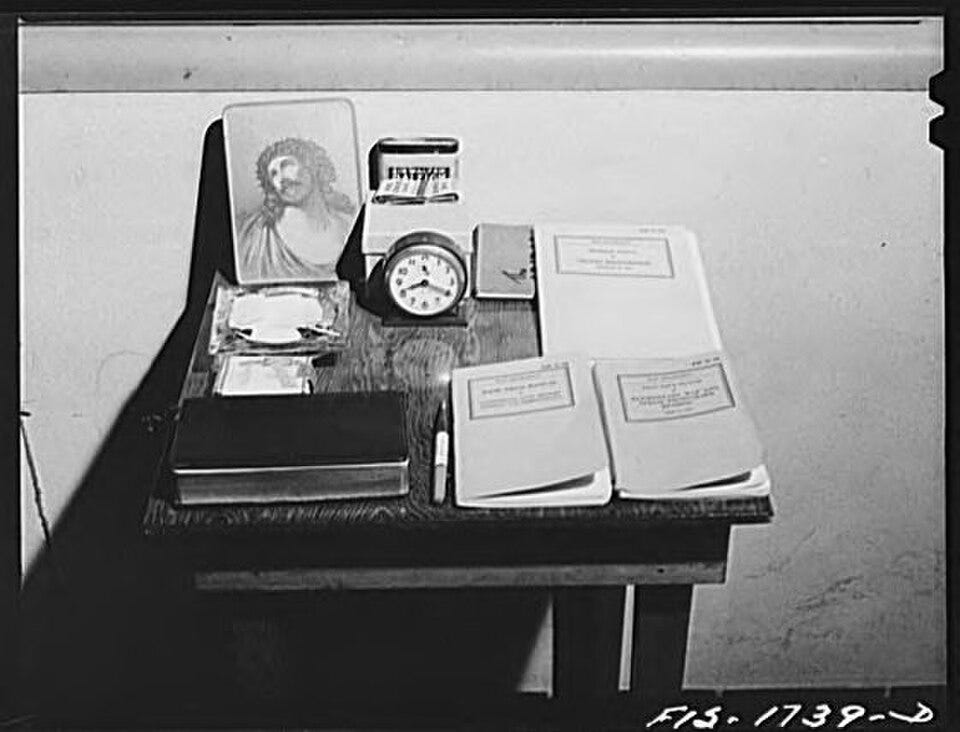
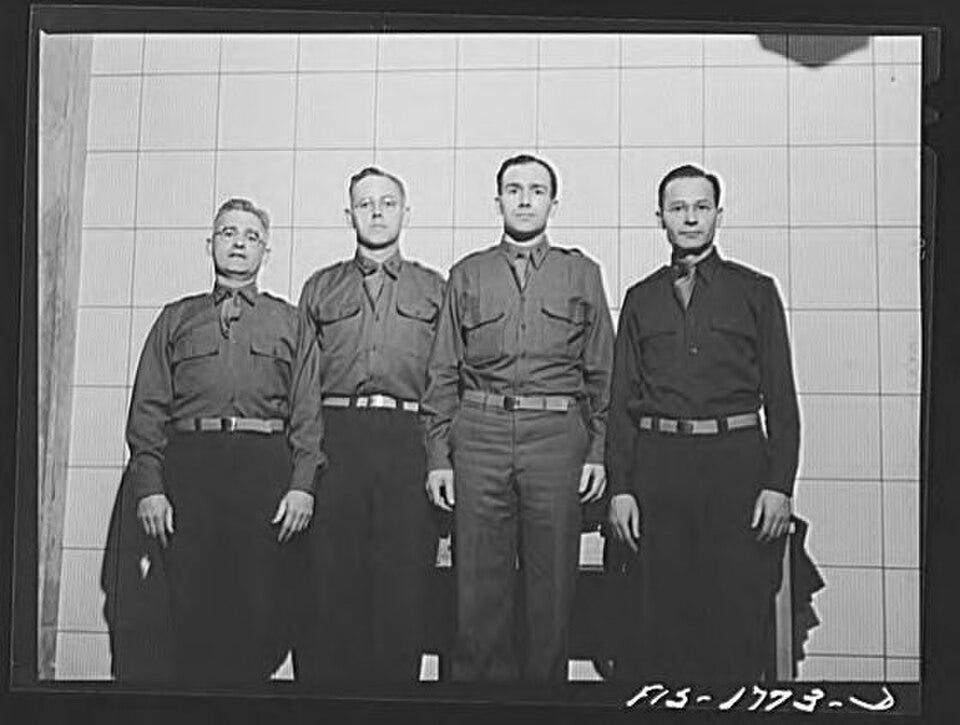
In 1943, aboard the troop transport Dorchester, a German torpedo ruptured the Atlantic night. Panic spread as the ship began to sink into freezing water. Four chaplains moved through the chaos: a Catholic priest, a Methodist minister, a Reformed minister, and a Jewish rabbi, Alexander Goode.
They organized evacuation, calmed terrified soldiers, and handed out life jackets until none remained. When the supply ran out, they gave away their own. As the ship went down, survivors saw them standing together, arms linked, praying.
They did not ask who was Catholic, Protestant, Jewish, or unbelieving. The water erased those categories faster than doctrine could defend them.
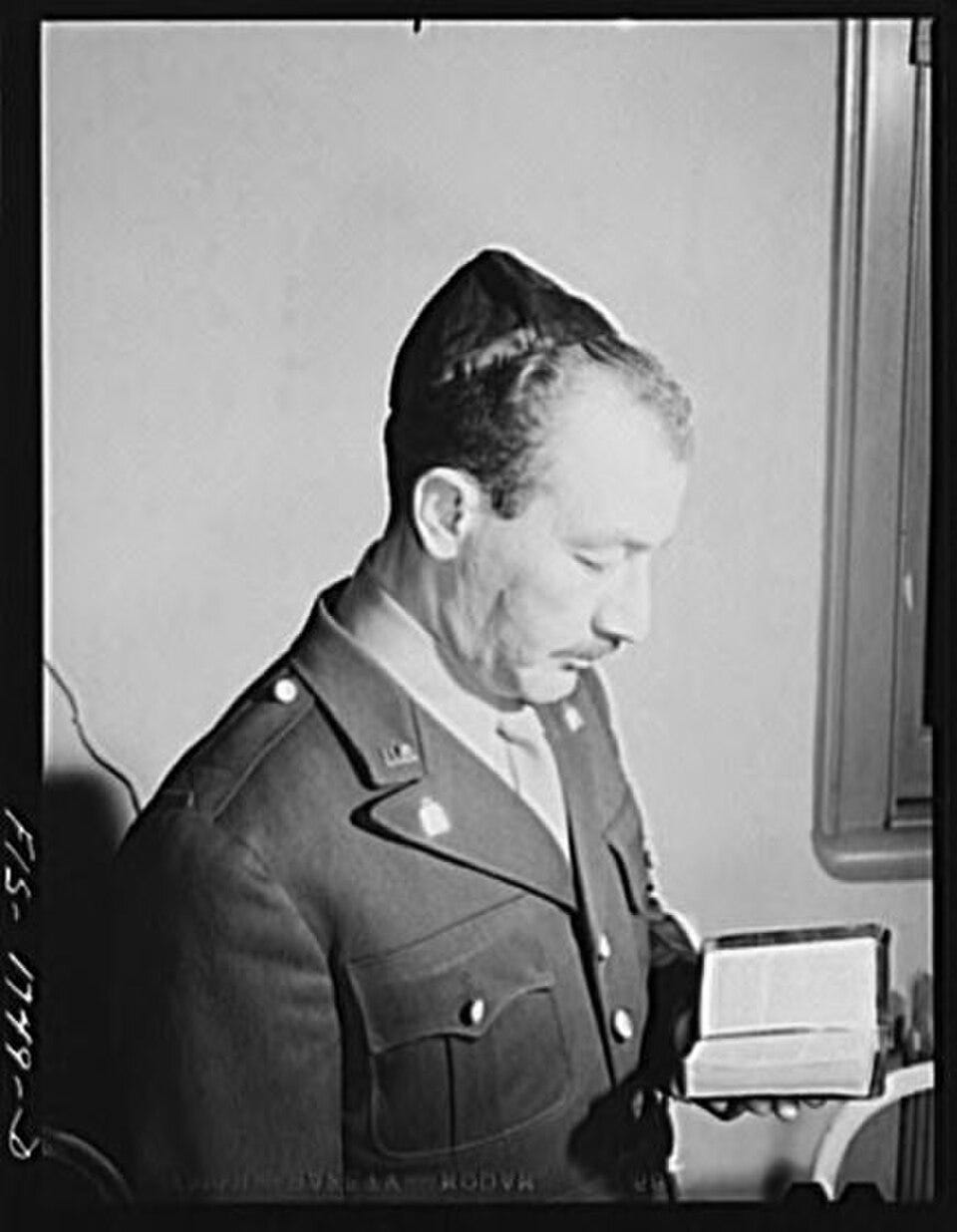
Two decades later in Vietnam, another chaplain carried the same burden into a different kind of ruin. Rabbi Arnold Resnicoff moved through a battlefield hospital after an attack, ministering to the wounded Marines. A fragment of shrapnel had torn his camouflage uniform; a fellow Marine ripped his undershirt to fashion a makeshift yarmulke for him. It became an improvised sign of dignity inside devastation.
He prayed over the wounded as blood, dust, and sweat marked the cloth. The image later became emblematic: a Jewish chaplain not set apart from his unit, but held within it as necessary presence rather than symbolic exception.
Kapaun in Korea. Goode in the Atlantic. Resnicoff in Vietnam. Three wars, three traditions, and a single recurring pattern: chaplaincy as moral presence inside organized violence.
Not ideology. Not morale management. Not decoration for command. Something closer to conscience with a uniform.
This is the historical achievement of American military chaplaincy at its best: a pluralistic moral institution designed to accompany soldiers without surrendering its independence to the state.
That architecture is now being reinterpreted.
Recent reforms and rhetoric associated with Secretary Pete Hegseth emphasize restoring a more explicitly religious identity to chaplaincy, while rejecting what is described as its bureaucratic or therapeutic dilution. The aim is a chaplaincy more overtly grounded in religious vocation, less embedded in wellness frameworks.
At first glance, this sounds like a recovery of seriousness. The deeper question is what kind of seriousness is being restored, and at what cost.
American chaplaincy has never been a single religious project. It is plural by design, shaped by Catholic, Protestant, Jewish, Muslim, and other traditions operating within a constitutional order that assumes no single theology governs the nation.
When that balance shifts, the question is not whether religion remains in the military, but which forms of religion become most legible to institutional power.
Catholic moral theology introduces a particular tension into that system. It carries an internal grammar of restraint: just war criteria, proportionality, protection of noncombatants, and the insistence that conscience cannot be fully absorbed into command authority.
It does not make Catholicism anti-military. It makes it morally bounded. And bounded moral systems are difficult to absorb into institutions that depend on clarity and operational purpose.
That raises a difficult question: what happens when traditions built on moral limitation are placed inside environments that increasingly frame war as civilizational necessity rather than constrained action?
One proposed reform involves removing rank insignia from chaplains, emphasizing clerical identity over military integration.
On the surface, this elevates spiritual distinctiveness. But chaplains have historically functioned within a dual structure — religious authority and military authority. That dual positioning allowed them to move between worlds: offering pastoral care, but also retaining enough institutional standing to advocate for conscience and at times resist command pressure.
The question is whether reducing visible institutional status strengthens spiritual independence or weakens the chaplain’s capacity to serve as moral counterweight inside the system.
The issue is not whether chaplains are religious. Kapaun, Goode, and Resnicoff already answer that.
The issue is what moral function religion is expected to serve inside the armed forces.
Three models are always in tension: chaplaincy as moral witness that preserves conscience within violence; chaplaincy as therapeutic support that translates religion into resilience language; and chaplaincy as civilizational reinforcement that aligns spiritual identity with national cohesion.
All three exist. The question is which becomes dominant.
Institutional change rarely arrives as exclusion. It arrives through emphasis, through language and what forms of speech feel native to power.
The concern is not formal removal of conscience, but a gradual narrowing of what kinds of moral speech remain central. Conscience and pluralism may become less authoritative within the chaplain’s role, even as the role itself remains intact.
If that shift continues, chaplaincy does not become less religious. It becomes differently religious: less a site of moral tension inside war, more a reinforcement of moral unity around it.
Father Emil Kapaun carried men through gunfire so they would not die alone. Rabbi Alexander Goode gave away his life jacket so others might live a little longer in freezing water. Rabbi Arnold Resnicoff prayed over wounded Marines wearing a bloodstained symbol of faith fashioned from another soldier’s uniform.
None of them existed to sanctify war. They existed to insist that even inside war, the human being remains morally irreducible.
That inheritance did not erase difference but carried it.
The question now is whether that plural moral tradition will continue to define military chaplaincy or whether it will be reshaped into something more unified, and more closely aligned with the logic of power.
Not less religious. Just differently so. And that difference may prove decisive.