On March 7th scientists from across the country will stand in solidarity to “save science, protect health, and defend democracy,” as part of a grassroots effort to fight the Trump Administration’s efforts to dismantle the nation’s scientific institutions.
Attacks on science are attacks on all of us. Science, after all, produces evidence to approximate truth, and we need to stand up for truth more than ever.
I come from a science family. My parents met at their college’s Math and Science Christmas party. My dad became a medical doctor and National Institute of Health-funded researcher, and my mom was a math teacher before she raised seven children. My childhood was filled with organic, impromptu science experiments. If you complained about the generic ice cream Mom brought home from the grocery store, next thing you know we’d have an elaborate taste test organized by Dad. The hypothesis: off-brand vanilla ice cream tastes as good as brand-name ice cream. We were happy to put it to the test.
Family reunions to this day have math and science games integrated into the fun.
I remember bonding with excitement with my older brother Chris, now a physician, about the steps in the scientific process: 1) Ask a question/observe, 2) Form a hypothesis, 3) Conduct an experiment to test it, 4) Analyze data, and 5) Draw a conclusion.
As a kid I used to try to understand human behavior with my own observational social studies. Some in my head: Why do my friends always use the same toilet stall in the bathroom? And others, as award-winning 7th grade science fair projects: Does chocolate consumption cause acne among my friends/human subjects?
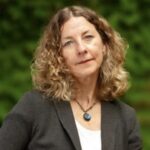
Now, as a community health scientist at the only public research university in Chicago whose health equity research funding is under attack, I’m one of the original organizers of Stand Up For Science Chicago.
As much as I geek out about scientific process, I have spent my career critiquing and pushing scientific processes and institutions to be more inclusive. My Chicago action research is neighborhood-based, participatory, meant to use research to address community concerns and involves those most impacted in the research process such as low wage workers or residents exposed to cumulative environmental exposures . I struggle with the tension between the academy and impacted communities as we try to answer questions of ownership and equity: whose data is it? Whose knowledge is valued? What is evidence? Whose research questions are being tested? Whose voices are systematically left out? To what degree do our dominant research approaches produce truth? Or do they just produce poor proxies of truth.
Thought leaders in this area push researchers to consider the influence and unintended bias in their community research; asking: Could we be missing out on community wisdom because conversations about research are happening without community meaningfully present at the table? What is valued? For whom? At what costs? Could we be accepting partial truths because community expertise is not valued?
I train community members to serve as citizen scientists in an attempt to shift research out of the ivory tower so it can be more community led. As a 2023 Chicago United for Equity Fellow I worked on a theory of change for how to create conditions for research in Chicago neighborhoods to be more community-led, liberatory and participatory. I use qualitative research methodologies that involve storytelling, photo elicitation and meaning making that values community expertise and recognizes multiple ways of knowing. I avoid extractive methodologies that are complicit with structural violence in the academy.
Critiques aside about how to improve science, the current attack on science is deadly.
The Trump administration has demonstrated a disregard of the scientific process and a belief that whims and personal experience substitute for generalizable, evidenced-based knowledge.
Take Trump’s nominee for Surgeon General, known as the nation’s doctor, Casey Means. With no scientific license or public health background, Means, 38, has little scientific experience, publishing only 6 peer-review research publications — fewer than many of our PhD students.
Means is part of Robert F. Kennedy’s (RFK) Make American Healthy Again movement which actively ignores or downplays medical science in making public health recommendations from the use of Tylenol in pregnancy, to the food upside down pyramid to stacking children’s vaccine recommendations made by majority vote of a committee stacked with vaccine skeptics. RFK also has no medical, scientific or research background.
The disregard of science doesn’t stop at MAHA. A few weeks ago, the Trump administration revoked a scientific finding that has been the basis for U.S. regulation of greenhouse gas emissions. The rule finalized by the Environmental Protection Agency rescinds a 2009 government declaration known as the endangerment finding that determined that carbon dioxide and other greenhouse gases threaten public health and welfare. The finding is evidence-informed regulation under the Clean Air Act for motor vehicles, power plants and other pollution sources that are heating the planet.
Americans need to pay close attention to the erasure of the scientific process in governmental policy decisions. Call for the impeachment of RFK as Secretary of Health and Human Services. Tell your members of Congress to vote no on Casey Means for Surgeon General.
And Stand Up for Science on March 7 at a rally near you.